Donations
If you find this site
informative please donate, every
donation helps us keep up
with hosting costs.
Thanks!
Warrants
Alert
Books

THE INVESTOR'S GUIDE TO WARRANTS:
Capitalize on the Fastest Growing Sector of the
Stock Market, Second Edition (Hardcover)
by Andrew McHattie Rating: ISBN-10: 027303751X
Quick Links:
Back to Home Page Back to Warrant Sheets
Back to Expired Warrants
Website -
https://www.goldsummitcorp.com/
Warrant Symbol - GSM.WT
Number Trading - 1,860,067
Expiration Date - July 10, 2004
Cusip - 38074R 11 9
Warrants called to trade news:
Gold Summit warrants to trade at the open
2003-11-19 16:51 ET - Warrants Called to Trade
Effective at the opening Nov. 20, 2003, the 1,860,067 warrants of Gold Summit will commence trading on the TSX Venture Exchange. The company is classified as a gold mining company.
Jurisdiction: Ontario
Capitalization: 1,860,067 warrants with no par value of which 1,860,067 warrants are issued and outstanding
Transfer agent: Equity Transfer Services Inc.
Symbol: GSM.WT
Cusip No: 38074R 11 9
The warrants were issued pursuant to a reorganization of the company which is described in the management proxy circular dated April 17, 2003. The 1,860,067 warrants entitle the holder to purchase 1,860,067 shares at a price of 50 cents per share and will expire on July 10, 2004.
Visitor Map
Days Left
Warrant Terms
- Expiration Date: The last day the warrants can be exercised. If warrants aren't going to be exercised then they must be sold the day before the expiry date. The longer the time to expiry the more valuable the warrants.
- Leverage: A measure of how much you can increase your exposure to a share if you bought warrants instead of making a direct investment. It is the current share price divided by the current price of the warrant.
- Intrinsic Value: The difference between the exercise price and the actual trading price of the common stock. Once the common has gone over the exercise price, the warrants are "In the Money."
- Volatility: The higher the volatility rating, the higher the price of the warrant. Historical volatility is calculated by using the standard deviation of an underlying stock price over a specific period.
- Time Value: The difference between the current warrant price and its intrinsic value. Interpreted as the consideration paid for the advantage the warrant buyer has over the direct investor.
Charts
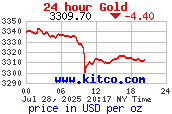
Gold Prices
Silver Prices
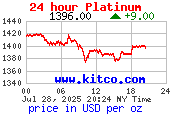
Platinum Prices
Palladium Prices
Visitors